When Your Heater Quits: A Wake Forest Homeowner's Guide
When you're facing a heating maintenance emergency in wake forest, nc, time matters. Wake Forest winters may not reach extreme lows, but temperatures regularly drop into the 30s and 40s—cold enough to make a broken heating system more than just uncomfortable. Whether your furnace has stopped working entirely, you're hearing alarming noises, or you detect strange smells, knowing how to respond quickly can protect your family's safety and prevent costly damage to your home.
Quick Action Steps for a Heating Emergency:
- If you smell gas: Leave immediately and call 911, then your gas company
- If your carbon monoxide detector sounds: Evacuate and call emergency services
- For complete heat loss: Check your thermostat, circuit breaker, and air filter first
- For strange noises or burning smells: Turn off your system and call a professional
- To stay safe while waiting: Close doors to unused rooms, use safe space heaters if available, and never use your oven for heat
For expert help, visit our heating service page or schedule emergency service right away.
HVAC systems fail unexpectedly, and common causes include electrical issues, worn-out parts, and lack of regular maintenance. Research shows that regular preventative maintenance can reduce the risk of heating system breakdowns by up to 50%. This guide walks you through recognizing true emergencies, taking immediate safety steps, understanding what professional emergency service involves, and preventing future breakdowns through proper maintenance.
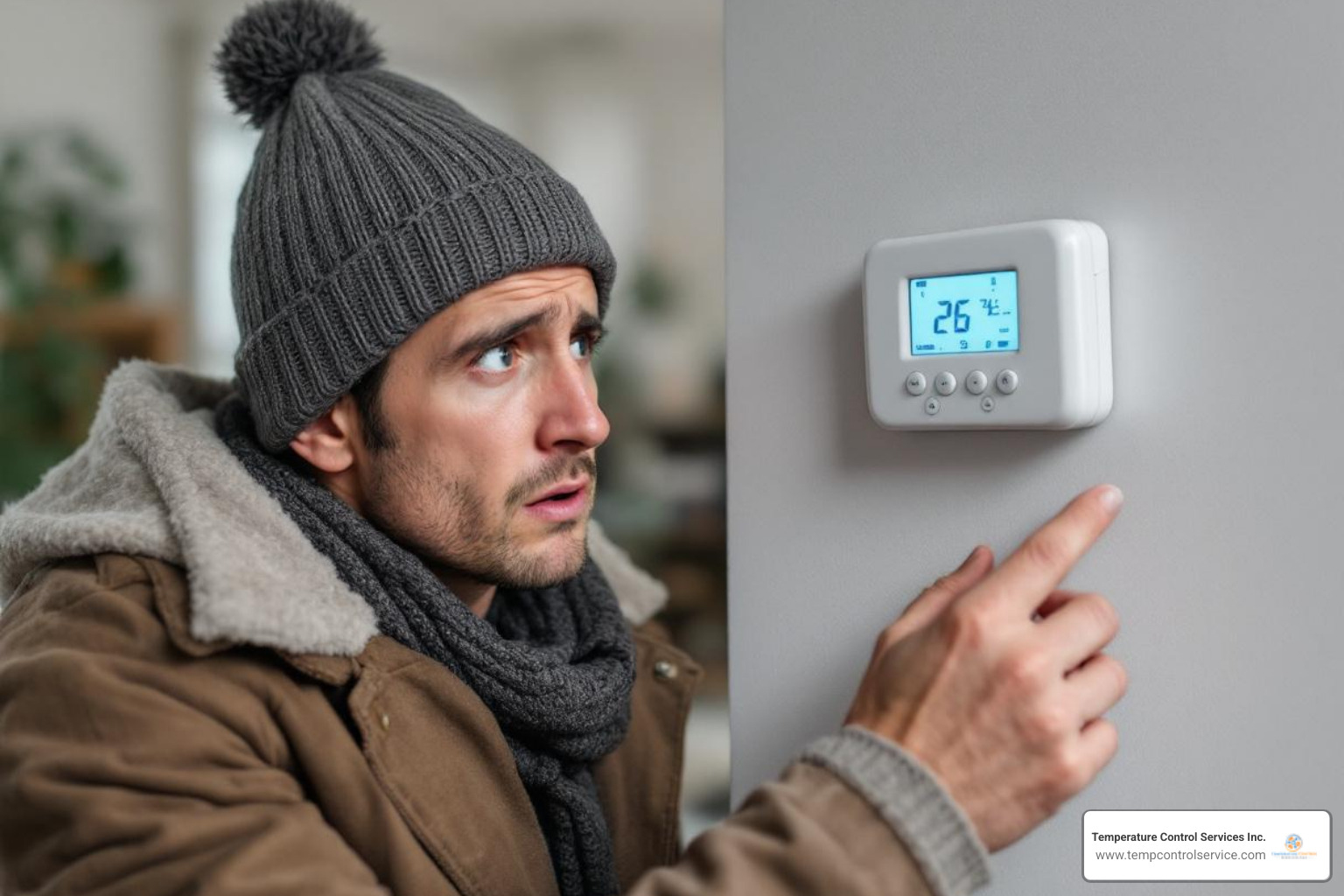
Recognizing the Red Flags: Is It a Heating Emergency?
Identifying a heating emergency isn't always straightforward. Sometimes, it's a gradual decline in performance, but other times, it's a sudden, alarming event. Knowing the signs that demand immediate attention can save you from discomfort, damage, and even danger.
Here are the critical indicators that an emergency heating repair is needed in Wake Forest, NC, and surrounding areas like Durham, Cary, and Chapel Hill:
- No Heat at All / Complete System Shutdown: This is the most obvious sign. If your furnace or heat pump simply isn't turning on, or if it turns on but blows cold air, especially when Wake Forest temperatures are dipping into the 30s or 40s, it's an emergency. A complete lack of heat during cold weather can quickly make your home uncomfortable and potentially unsafe.
- Loud Banging or Grinding Noises: While all heating systems make some noise, sudden, unusually loud sounds like banging, grinding, squealing, or rattling are red flags. These noises often indicate a serious mechanical issue, such as a loose or broken component, a faulty motor, or a problem with the fan. Ignoring these sounds can lead to further damage to your system. For more information on strange noises, check out our insights on why your heating system is making noises.
- Strong Gas or Burning Smells: Any smell of natural gas, sulfur, or something burning is a serious concern. If you detect a gas smell, leave your home immediately and call 911 and your gas company from a safe distance. A burning smell, especially one that persists after the initial start-up of your heater for the season, could indicate electrical issues, overheating components, or even a fire hazard. Our blog also covers heating system smells like burning.
- Malfunctioning Pilot Light: For older furnaces, a pilot light that repeatedly goes out or appears yellow or orange instead of blue could signal a problem with the gas supply or a ventilation issue. A yellow flame can also indicate incomplete combustion, which could produce carbon monoxide.
- Carbon Monoxide Detector Alarm: This is an absolute emergency. If your carbon monoxide detector goes off, evacuate everyone from your home immediately and call emergency services. Carbon monoxide is an odorless, colorless, and deadly gas. This could be related to a faulty heating system. Understanding gas line safety is crucial for every homeowner.
- Visible Smoke or Flames: If you see any smoke, sparks, or flames coming from your heating unit, turn off the system immediately if safe to do so, and call emergency services. This is a clear fire hazard.
Other signs that might not be immediate emergencies but warrant prompt attention include inconsistent temperatures throughout your home, a sharp rise in energy bills, poor air quality, or a system that cycles on and off too frequently. An HVAC system over 10 years old also has an increased likelihood of needing repairs.
When your heating system fails unexpectedly, especially during a chilly Wake Forest evening, panic can set in. But a calm, structured approach is your best defense. Here’s what a homeowner should do immediately if their heating system fails during cold weather in Wake Forest, NC, or nearby towns like Youngsville or Franklinton:
- Safety First: Before anything else, assess for immediate dangers. If you smell gas, hear a hissing sound, or your carbon monoxide alarm is sounding, evacuate everyone from your home immediately. Once outside, call 911 and your gas company. Do not re-enter your home until emergency services declare it safe.
- Check the Thermostat: This might sound basic, but it's often the culprit!
- Ensure the thermostat has power (check batteries if it's digital).
- Confirm it's set to "Heat" mode.
- Make sure the temperature setting is several degrees higher than the current room temperature.
- If it's a programmable thermostat, check its schedule to ensure it's not set to an "away" or "off" period.
- Check Air Filters: A severely clogged air filter restricts airflow, which can cause your system to overheat and shut down. Check the filter and replace it if it's dirty. This is a common issue that can often be resolved without a service call.
- Check the Circuit Breaker: Head to your electrical panel. Locate the breaker switch for your furnace or heat pump. If it's tripped (usually halfway between "on" and "off"), flip it completely to "off" and then back to "on." Sometimes, a power surge can cause a breaker to trip. If it trips again immediately, do not reset it repeatedly; this indicates an electrical problem that requires professional attention.
- Keep Doors and Windows Closed: While waiting for help, minimize heat loss by keeping all windows and exterior doors tightly closed. Close doors to unused rooms to concentrate any remaining heat in the main living areas.
- Stay Warm Safely: Bundle up in layers, use blankets, and consider gathering in one room. If you have safe, electric space heaters, use them according to manufacturer instructions. Never use gas ovens, grills, or other unvented combustion appliances for heat, as they produce dangerous carbon monoxide.
- Call for Professional Help: If these basic checks don't resolve the issue, it's time to call us. We understand the urgency of a heating maintenance emergency in wake forest, nc. For more detailed guidance on what to do when your heating system breaks down, visit our blog on when your heating system breaks down.
The Dangers of Delaying Emergency Heating Repairs in Wake Forest
Delaying an emergency heating repair, especially when the temperatures in Wake Forest, NC, or neighboring cities like Oxford and Stem, drop, can lead to a cascade of problems far more severe than just discomfort. The risks associated with putting off essential repairs are significant and can impact your safety, health, and finances.
Here are the critical risks of delaying emergency heating repairs:
- Increased Safety Risks: Many heating emergencies, such as gas leaks or electrical malfunctions, pose immediate threats. A faulty furnace can produce carbon monoxide, an invisible, odorless gas that can be fatal. Electrical issues can lead to shorts, sparking, and even house fires. Delaying repair means prolonging exposure to these life-threatening hazards.
- Carbon Monoxide Exposure: As mentioned, a malfunctioning heating system, particularly a gas furnace, can produce dangerous levels of carbon monoxide. Symptoms of CO poisoning can mimic the flu, making it hard to detect until it's too late. This is why a working carbon monoxide detector is non-negotiable.
- Fire Hazards: Overheated components, frayed wiring, or a buildup of combustible materials within a neglected furnace can ignite, leading to a devastating house fire. Delaying repairs on a system showing signs of burning smells or sparks significantly escalates this risk.
- Escalating System Damage: A minor issue today can become a major, costly repair tomorrow. For example, a small worn-out part that isn't replaced promptly can cause a chain reaction, leading to the failure of larger, more expensive components. What could have been a simple fix might turn into a complete system overhaul or replacement, which is often far more expensive.
- Frozen and Burst Pipes: Perhaps one of the most common and damaging consequences of a prolonged heating failure in cold weather is frozen pipes. Without adequate heat, water in pipes can freeze, expand, and burst, leading to extensive water damage, mold growth, and costly plumbing repairs. This risk is particularly high in unheated basements, crawl spaces, or exterior walls.
- Health Concerns from Cold Exposure: For vulnerable populations, such as the elderly, infants, or individuals with pre-existing health conditions, prolonged exposure to cold temperatures can lead to hypothermia, respiratory issues, and other serious health problems. Reliable heating is essential for maintaining a safe and healthy indoor environment.
- Higher Energy Bills: Even if your system is still technically working but struggling, a heating system operating inefficiently due to a developing problem will consume more energy to maintain the desired temperature. This leads to unnecessarily high utility bills, essentially costing you more money in the long run than addressing the repair promptly.
We emphasize the importance of immediate action when facing a heating emergency. Our team is dedicated to providing swift and effective solutions to mitigate these risks. Learn more about our commitment to rapid response on our emergency response page.
What to Expect from a Heating Maintenance Emergency in Wake Forest, NC
When you're in the midst of a heating maintenance emergency in wake forest, nc, you need more than just a technician; you need a rapid, reliable, and professional solution. We understand the urgency, and our approach is designed to restore your comfort and peace of mind as quickly and efficiently as possible.
Here's what you can typically expect when you call us for emergency heating repair services in Wake Forest, Creedmoor, Morrisville, and other areas we serve:
- Rapid Response Times: We know that when your heat goes out, every minute counts. Our commitment is to provide fast dispatch. Our team is often on the job in Wake Forest in no time, ensuring that a trained technician heads your way promptly. Our goal is to get to your home quickly, diagnose the issue, and begin repairs without unnecessary delays.
- 24/7 Availability: Heating emergencies don't stick to business hours, and neither do we. Our dispatchers are available 24/7, ready to take your call whether it's 2 a.m. or a holiday weekend. This around-the-clock service ensures that you're never left in the cold, regardless of when a breakdown occurs.
- Professional Diagnosis: Upon arrival, our skilled technicians will conduct a thorough assessment of your heating system. Using real testing—including static pressure, airflow, electrical, and refrigerant checks—they'll pinpoint the root cause of the problem, not just treat the symptoms. We service all major brands and types of heating systems, including furnaces, heat pumps, and more.
- On-Site Repairs: Our service vehicles are well-stocked with common parts for NC fixes. This means we can often perform lasting repairs on the spot, minimizing the time your home is without heat. We believe in fixing what matters for comfort and efficiency, ensuring your system runs reliably long after we leave.
- Transparent Communication: We believe in clear pricing and transparent communication. Before any work begins, our technician will explain the issue in detail, present your repair options, and provide clear pricing. We'll even share photos or notes so you know exactly what changed and why.
- Clean and Respectful Service: Our technicians are trained to treat your home with respect. They use clean boot covers, lay down drop cloths, and ensure that the work area is left spotless after the repair is complete.
For comprehensive heating repair services in Wake Forest, NC, and to learn more about how we handle emergencies, please visit our dedicated page on heating repair in Wake Forest.
Choosing the Right Emergency HVAC Service
When your heating system fails, choosing the right emergency HVAC service is crucial. You need a team that is not only skilled but also trustworthy and responsive. Here's what Wake Forest, NC residents should consider when selecting an emergency heating repair service:
- Local Wake Forest Presence: Opting for a local company means faster response times and a team familiar with the specific weather patterns and housing types in Wake Forest and nearby communities like Butner, Durham, and Cary. A local company understands the unique needs of our community. You can find more about our presence in the area on our service areas page.
- Licensed and Insured Technicians: Always ensure that any technicians working on your system are fully licensed and insured. This protects you from liability in case of accidents and guarantees that the work meets professional standards.
- Positive Customer Reviews: Look for companies with a strong track record of positive customer feedback. Reviews often highlight aspects like responsiveness, professionalism, quality of work, and customer service—all vital for an emergency situation.
- NATE-Certified Professionals: NATE (North American Technician Excellence) certification indicates that a technician has met the highest industry standards for technical proficiency. This certification ensures that the person working on your heating system possesses expert knowledge and skills.
- Experience with All System Types: Your home might have a furnace, a heat pump, or even a specialized radiant system. Choose a company with broad experience across various heating technologies to ensure they can effectively diagnose and repair your specific unit.
- Commitment to Customer Satisfaction: A reputable company will stand behind its work. Look for guarantees or promises of customer satisfaction. We pride ourselves on being the #1 family-owned HVAC provider in The Triangle, known for reliable, professional service. Learn more about us on our about us page.
Choosing a local, reputable company provides numerous benefits, including quicker response times, personalized service, and a team that genuinely cares about the community's well-being.
How to Avoid a Future Heating Maintenance Emergency in Wake Forest, NC
While we're always here to help with a heating maintenance emergency in wake forest, nc, our ultimate goal is to help you avoid them in the first place. Many heating system breakdowns are preventable with a proactive approach. Research indicates that regular preventative maintenance can reduce the risk of heating system breakdowns by up to 50%.
Here are crucial preventative measures Wake Forest, NC residents can take to avoid emergency heating repairs:
- Regular Preventative Maintenance: This is the single most effective way to prevent unexpected breakdowns. Just like your car needs regular oil changes, your heating system requires seasonal tune-ups. During these visits, our technicians clean coils, tune burners, check filters, test airflow, and identify minor issues before they escalate. This helps your system last longer, perform better, and prevents surprise shutdowns.
- Annual Tune-Ups: Schedule an annual professional tune-up for your heating system, ideally in the fall before the cold weather sets in. This comprehensive check ensures all components are working correctly, identifies potential wear and tear, and optimizes your system for efficiency and reliability throughout the winter.
- Consistent Filter Changes: A dirty air filter is a common culprit for heating system inefficiencies and breakdowns. It restricts airflow, making your system work harder and potentially leading to overheating. We recommend checking your air filter monthly and changing it every 1-3 months, or more frequently if you have pets or allergies. A clean filter is cheap insurance for airflow and coil cleanliness.
- System Age Awareness: The average lifespan of a furnace is 15-20 years. After this period, the likelihood of breakdowns and the need for emergency repairs increases significantly. If your system is approaching or has exceeded this age, it's wise to be more vigilant with maintenance and consider replacement options.
- Upgrading Older Systems: If your heating system is old and frequently requires repairs, an upgrade might be a more cost-effective solution in the long run. Modern heating systems are significantly more energy-efficient and reliable, saving you money on utility bills and reducing the stress of unexpected breakdowns.
- Consider a Maintenance Plan: Enrolling in one of our comprehensive maintenance plans can take the guesswork out of preventative care. Our plans typically include annual tune-ups, priority service, and other benefits designed to keep your system running smoothly and efficiently. Learn more about our offerings on our maintenance plan page.
By implementing these preventative measures, residents in Wake Forest, Youngsville, and other service areas can significantly extend the life of their heating systems, reduce energy consumption, and enjoy consistent comfort throughout the colder months, minimizing the need for emergency calls.
Frequently Asked Questions About Wake Forest Heating Emergencies
What defines a heating maintenance emergency in Wake Forest, NC?
A heating maintenance emergency in Wake Forest, NC, is any situation that compromises the safety of your home or its occupants, or leaves your home without adequate heat during cold weather. This includes a strong smell of gas, the carbon monoxide detector alarm sounding, loud banging or grinding noises coming from your unit, visible smoke or flames, or a complete loss of heat when outdoor temperatures are low (e.g., in the 30s or 40s Fahrenheit). If your system is completely non-functional during a cold snap, that certainly qualifies.
What can I do to prevent my heating system from failing?
The most effective measure you can take to prevent your heating system from failing is to enroll in a regular preventative maintenance plan. This includes annual professional tune-ups, ideally in the fall, where technicians clean, inspect, and adjust your system. Additionally, consistently changing your air filters every 1-3 months can significantly improve efficiency and prevent issues. These practices can reduce the risk of unexpected breakdowns by up to 50% and extend your system's lifespan.
What should I check myself before calling for an emergency repair?
Before calling for an emergency heating repair, you can perform a few quick checks:
- Thermostat Settings: Ensure your thermostat is set to "Heat," has power (check batteries if digital), and the temperature setting is higher than the current room temperature.
- Air Filter: Check if your air filter is clogged. A dirty filter can restrict airflow and cause the system to shut down. Replace it if needed.
- Circuit Breaker: Go to your electrical panel and check the circuit breaker for your heating system. If it's tripped, reset it once. If it trips again immediately, do not keep resetting it, as this indicates a more serious electrical issue.
- Pilot Light (for older furnaces): If you have an older gas furnace, check if the pilot light is lit and burning blue. If it's out or yellow/orange, it could indicate a problem.
If these simple checks don't resolve the issue, or if you suspect a more serious problem like a gas leak or carbon monoxide, it's crucial to call a professional immediately.
Get Your Heat Back Fast with Professional Help
A heating emergency requires a swift and professional response to ensure your family's safety and comfort. By recognizing the signs, taking immediate safety precautions, and calling a trusted local expert, you can resolve the issue efficiently. For reliable and prompt service, residents trust Temperature Control Services Inc. to restore warmth and peace of mind. Don't wait in the cold—contact us for expert heating service in Wake Forest, NC today.





.svg)