


Recent Blog
Stay updated with our latest blog posts.


What does an HVAC maintenance visit include is one of the most practical questions a homeowner can ask — and knowing the answer helps you get real value from every service appointment.
Here is a quick overview of what a thorough visit covers:
Most homeowners in the Triangle area — including Durham, Wake Forest, Cary, and Chapel Hill — don't think about their HVAC system until something breaks down, usually in the middle of a North Carolina summer heat wave or a January cold snap. By then, what started as a minor issue has often become an expensive repair or even a full system replacement.
Regular professional maintenance is the straightforward way to avoid that scenario. A well-maintained system can last 15 to 20 years, while a neglected one may give out closer to the 10-year mark. Beyond longevity, skipping maintenance can quietly drain your wallet — airflow problems alone can reduce system efficiency by up to 15%, and dirty coils can push energy use up by as much as 30%.
This guide walks you through exactly what happens during a professional HVAC tune-up, what you can handle yourself, and what to watch out for when evaluating the quality of your service.
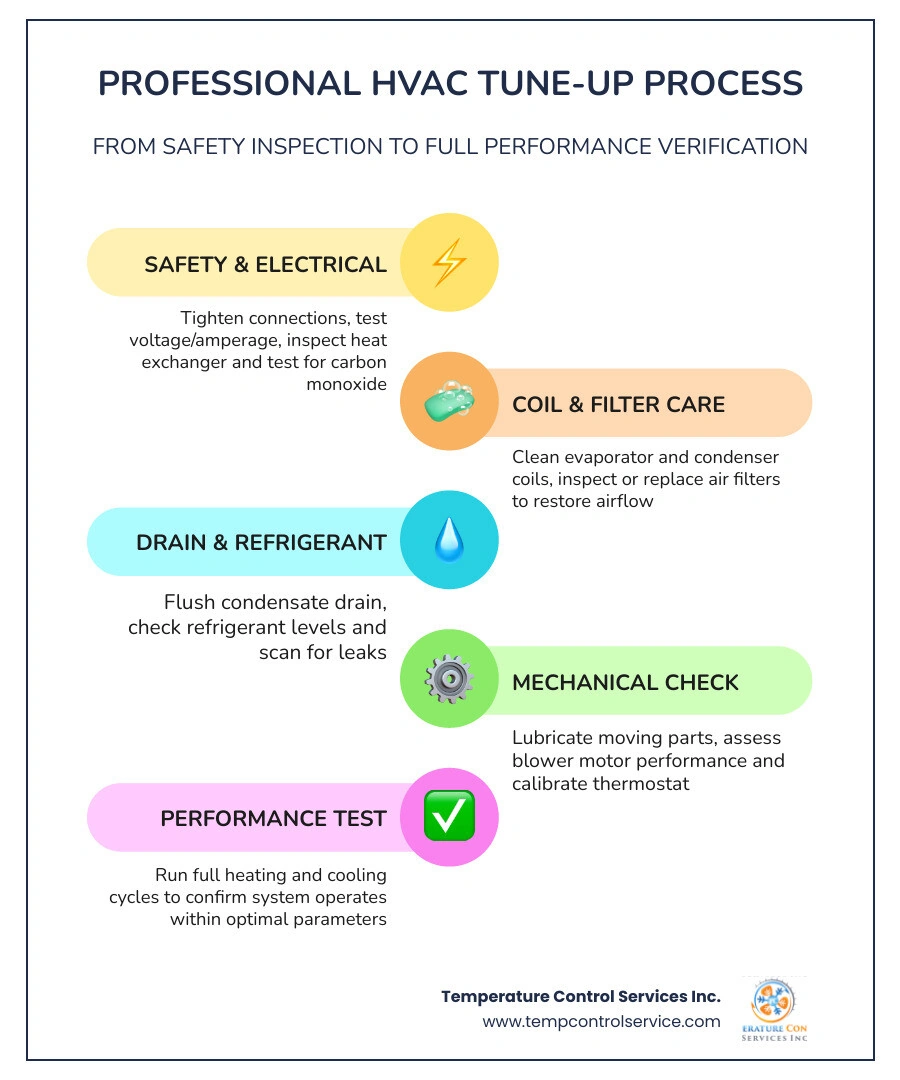

Think of a professional HVAC maintenance visit as an annual physical for your home’s comfort system. A certified technician doesn't just walk in, glance at your thermostat, swap a filter, and wave goodbye. Instead, they perform a comprehensive, multi-point inspection designed to analyze how your system is breathing, electrical components are firing, and mechanical parts are moving.
When a technician arrives at your home, the process begins with a series of diagnostic tests. They check the overall system operation, starting with thermostat calibration to verify that your "comfort command center" is communicating correctly with your heating and cooling units. If your thermostat is off by even a couple of degrees, your system may run longer than necessary, driving up utility bills and placing unnecessary wear on internal components.
Next, the technician moves to the electrical control box. They will inspect all wiring, tighten loose terminals, and test electrical safety controls. This step is crucial because loose connections are a leading cause of electrical failures and can even pose safety hazards. Technicians measure the voltage and amperage draw on your motors to ensure they are operating within safe, manufacturer-specified limits.
Equally important is the condensate drain line. As your system cools your home, it extracts moisture from the air. This moisture collects in a drain pan and flows out of your house. In our humid North Carolina climate, this dark, damp environment is a breeding ground for algae and mold. A professional visit includes inspecting and thoroughly flushing the condensate drain line to prevent clogs, which are the number-one cause of water damage and sudden system shut-offs during peak cooling seasons.
When the focus shifts strictly to the cooling side of your system, the technician zeroes in on the components that keep you cool during those sweltering Southern summers.
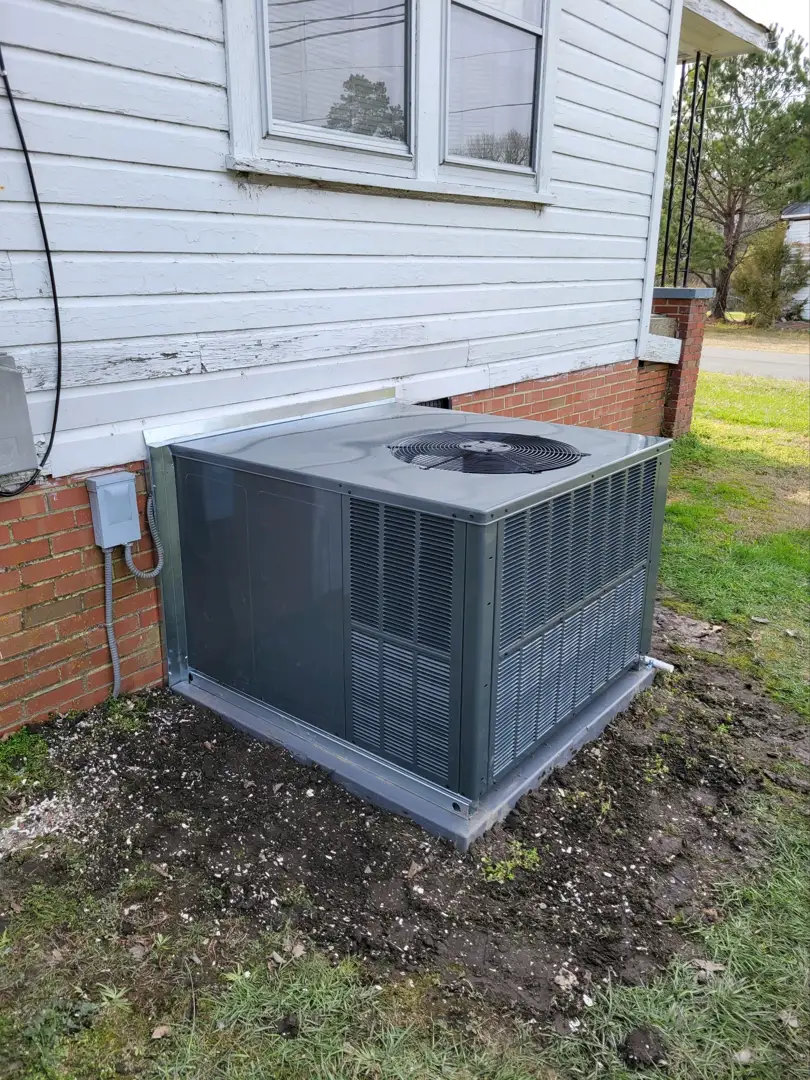
First and foremost is the cleaning of the condenser coils. The outdoor unit is constantly exposed to dirt, grass clippings, pollen, and leaves. When these elements coat the coils, they create an insulating barrier that prevents the system from releasing heat. Cleaning these coils restores proper heat transfer and protects the compressor — the heart of your air conditioner — from overheating.
The technician will also perform a precise refrigerant level check. If refrigerant is too low or too high, your system’s efficiency will plummet, and you risk destroying the compressor. If levels are low, the technician will look for signs of a leak rather than simply topping it off, as running a system with a leak violates environmental standards and damages the equipment over time.
Additionally, they will inspect the blower motor and fan blades, ensuring the blower assembly is clean and balanced to maintain optimal airflow. For a complete look at how to get your cooling system ready for the heat, check out our guide on Pre-Season AC Maintenance Tasks.
As the seasons change and the air turns crisp in Butner, Creedmoor, and Wake Forest, your heating system takes center stage. A heating-focused maintenance visit places safety at the very top of the priority list, especially for gas-fired furnaces.
The technician will perform a meticulous inspection of the heat exchanger. The heat exchanger is the metal chamber where combustion gases heat the air circulating through your home. Over time, the constant heating and cooling causes the metal to expand and contract, which can eventually lead to hairline cracks. A cracked heat exchanger is a severe safety hazard because it can leak deadly carbon monoxide into your home’s air supply.
In addition to inspecting the heat exchanger, the technician will:
For heat pumps, which handle both heating and cooling duties, specialized checks are performed on the reversing valve and defrost cycles to ensure the system transitions smoothly between modes. To learn more about preparing your heating system for the cooler months, read our Essential Spring HVAC Maintenance Guide.
Investing in regular, professional HVAC maintenance is not just about avoiding a breakdown; it is about protecting one of the largest financial investments in your home. The benefits of consistent care show up clearly in your comfort, your system’s lifespan, and your monthly budget.
First, regular maintenance dramatically extends your system’s lifespan. A typical residential HVAC system is designed to last 15 to 20 years with proper care. However, a neglected system often suffers from premature compressor or motor failure, forcing homeowners into a costly replacement around the 10-year mark. Routine service keeps parts lubricated, clean, and balanced, reducing the overall mechanical stress on the unit.
Second, preventative maintenance preserves your system’s energy efficiency. Over time, dust buildup, slightly loose electrical connections, and minor refrigerant imbalances cause your system to work harder to achieve the same indoor temperature. This increased workload directly translates to higher utility bills. By keeping the system optimized, you prevent the gradual efficiency losses that creep up on neglected systems.
Finally, keeping up with professional maintenance is often a strict requirement to maintain your manufacturer’s warranty. Most major equipment brands require documented proof of annual professional service. If a major component like a compressor fails within the warranty period, the manufacturer may deny the claim if you cannot provide service records proving the system was maintained. You can read more about why this proactive care is so vital in our article on Why Regular HVAC Maintenance Is Crucial, and discover additional ways to Optimize HVAC for Peak Performance.
While professional maintenance is essential for the technical, high-voltage, and chemical components of your system, there are several simple tasks that homeowners can — and should — perform to keep things running smoothly between service visits.
The most critical DIY task is checking and replacing your air filters. Depending on your household (whether you have pets, allergies, or a busy home in Cary or Durham), filters should be inspected monthly and replaced every 30 to 90 days. A heavily clogged filter chokes your system's airflow, forcing it to run longer, run hotter, and consume significantly more energy.
Another task homeowners can easily handle is maintaining outdoor unit clearance. Keep bushes, weeds, and vines trimmed at least two feet away from your outdoor condenser. Clear away fallen leaves, twigs, and grass clippings that can accumulate around the base of the unit. Additionally, ensure that your indoor supply and return vents are not blocked by furniture, heavy drapes, or rugs.
However, anything beyond these basic cleaning and clearance tasks should be left to the professionals. Opening up the electrical cabinet, handling refrigerants, adjusting gas valves, and cleaning delicate evaporator coils require specialized tools, advanced training, and strict adherence to safety standards. Attempting these tasks yourself can lead to severe safety hazards, system damage, or voided warranties. For a deeper look at what to avoid, check out our guide on HVAC Maintenance Mistakes Homeowners Make.
| Task Description | Homeowner DIY | Professional Technician |
|---|---|---|
| Check and replace air filters (every 30-90 days) | X | |
| Clear debris and maintain 2-foot clearance around outdoor unit | X | |
| Ensure indoor supply and return vents are unobstructed | X | |
| Clean delicate evaporator and condenser coils | X | |
| Measure electrical voltage, amperage, and test capacitors | X | |
| Check refrigerant levels and perform leak detection | X | |
| Inspect heat exchanger for cracks and test for carbon monoxide | X | |
| Flush and treat condensate drain lines with professional tools | X |
For homes in North Carolina, the general rule of thumb is to schedule professional maintenance twice a year: once in the spring for your cooling system and once in the fall for your heating system.
Our climate in areas like Chapel Hill, Morrisville, and Franklinton brings distinct challenges. Our summers are incredibly hot and highly humid, which places immense strain on air conditioners and heat pumps. High humidity means your cooling system must work twice as hard to dehumidify the indoor air while cooling it. This constant moisture extraction makes spring maintenance vital to ensure your condensate drains are completely clear and your coils are pristine before the summer heat arrives.
If you have a newer system, an annual comprehensive checkup may keep your warranty valid, but bi-annual visits are always recommended to optimize performance and catch minor issues before they turn into major disruptions. To learn more about timing, explore our articles on How Often Should You Service Your HVAC System and our specific HVAC Maintenance Checklist for Humid Climates.
It is completely normal to have questions about what to expect when a technician visits your home. Here are some of the most common questions homeowners ask our team.
A thorough, high-quality HVAC maintenance appointment should take between one and one and a half hours per system. If you have a larger home with multiple systems (for example, one unit for the downstairs and one for the upstairs), a single technician will likely need around two to three hours to complete the job properly.
This time is necessary because the technician must run the system through its operational cycles, perform physical measurements, carefully clean components, and document their findings. If a technician is in and out of your home in under 30 minutes, they likely only performed a superficial visual check rather than a true tune-up.
Not all maintenance services are created equal. Homeowners should watch out for these common warning signs of an incomplete or poor maintenance visit:
Yes, in many cases, skipping annual professional maintenance can void your manufacturer’s warranty. Major brands like Trane, Carrier, and Lennox explicitly state in their warranty terms that the equipment must be professionally maintained on an annual basis.
If an expensive component like a compressor or heat exchanger fails, the manufacturer will often require you to submit professional service records from the past several years before they will approve the replacement part. Keeping your receipts and written service reports from your maintenance visits is your best insurance policy to protect your warranty coverage.
At Temperature Control Services Inc., we believe that keeping your home comfortable should be simple, reliable, and stress-free. As the top family-owned HVAC provider in the Triangle, we are proud to serve our neighbors across Butner, Cary, Chapel Hill, Creedmoor, Durham, Franklinton, Morrisville, Oxford, Stem, Wake Forest, and Youngsville.
We know that a well-maintained heating and cooling system is the key to lower utility bills, cleaner indoor air, and long-term peace of mind. That is why we offer comprehensive, professional maintenance plans designed to keep your system running at peak performance all year long, protecting your investment and ensuring your family stays comfortable no matter what the North Carolina weather brings.
If you want to ensure your system is fully prepared for the upcoming season, explore our guide on Preventative HVAC Maintenance Raleigh NC or sign up today for our comprehensive maintenance-plan to get true peace of mind for your home comfort.




.svg)