


Recent Blog
Stay updated with our latest blog posts.

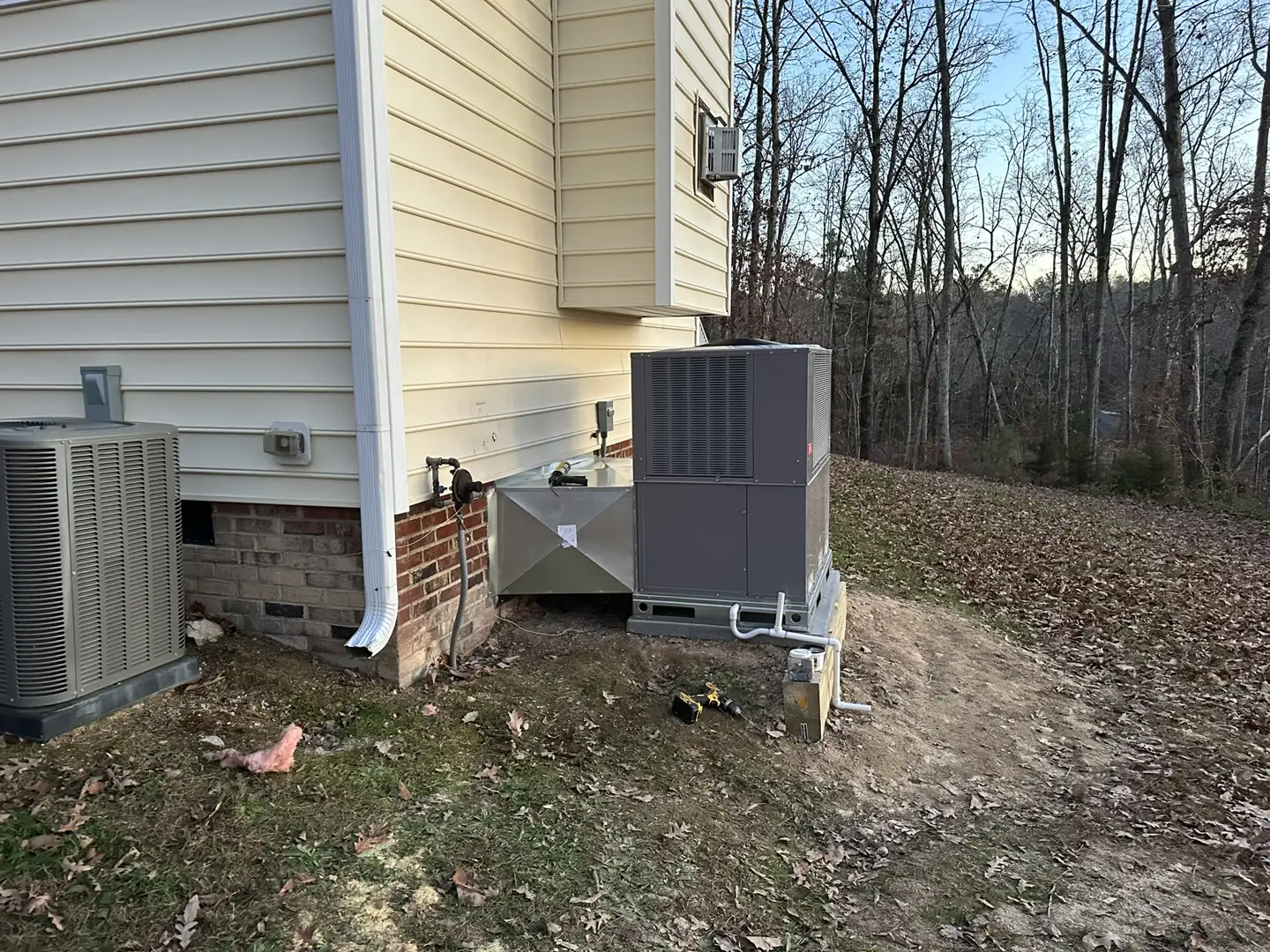
Understanding the heat pump benefits for North Carolina homeowners starts with one simple fact: your HVAC system works harder here than almost anywhere else in the country. North Carolina's climate throws long, sticky summers and unpredictable winters at your home — sometimes in the same week. A system that can handle both efficiently isn't just convenient. It can make a real difference in your comfort and your monthly utility bills.
Here are the core benefits at a glance:
For Triangle-area homeowners in cities like Durham, Raleigh, Cary, and Chapel Hill, a properly sized and installed heat pump is often the single most cost-effective HVAC upgrade available today.
North Carolina sits in what climate scientists call a mixed-humid transition zone. Summers are long and humid. Winters are mostly mild but can surprise you with a sharp cold snap. That combination means you need a system designed for year-round performance — not one optimized for extreme cold or extreme heat alone. Heat pumps were essentially built for exactly this kind of climate.
Heat pump sales surpassed gas furnace sales nationally for the first time back in 2022, and that trend has continued. In North Carolina, where roughly 66% of residential heating is already electric, the shift makes particular sense. The question for most homeowners isn't whether heat pumps work here — it's how to get the most out of one.
This guide walks you through everything you need to know: how heat pumps perform across NC's seasons, what financial advantages they offer, which rebates and incentives apply in 2026, and how to avoid the most common pitfalls.
Heat pump benefits for north carolina homeowners terms at a glance:
To appreciate the heat pump benefits for North Carolina homeowners, it helps to understand how these systems operate in our unique region. Unlike traditional combustion-based systems, heat pumps do not generate heat. Instead, they use electricity and refrigerant to move heat from one place to another.
During the summer, the system acts like a standard air conditioner, absorbing heat from your indoor air and releasing it outside. In the winter, a key component called the reversing valve changes the direction of the refrigerant flow. This allows the system to extract ambient heat from the cold outdoor air and bring it inside. To learn more about this mechanical magic, check out our guide on How Does a Heat Pump Work.
Because North Carolina lies in a transition zone, our weather can swing wildly from week to week. We often experience warm, humid afternoons followed by chilly nights. This is where a heat pump shines. It adapts seamlessly to rapid outdoor changes without wasting energy. For a deeper look at how local weather shapes your HVAC needs, read about How North Carolina Climate Affects Your HVAC System and see how these extreme How Temperature Swings Affect Your Heating and Cooling.
Summers in the Triangle area — from Durham and Cary to Wake Forest and Morrisville — are notoriously long, hot, and sticky. When humidity levels climb, your home can feel damp and uncomfortable even if the thermostat reads 72°F.
Traditional air conditioners often run in short, aggressive cycles. They cool the air quickly but shut off before they can pull enough moisture out of the air. Modern high-efficiency heat pumps, especially those equipped with variable-speed compressor technology, operate differently. They run for longer, gentler cycles at lower speeds. This continuous airflow allows the cooling coils to extract significantly more moisture from your indoor air.
Proper moisture removal is essential for home comfort. You can explore how this process works in our article on How Humidity Affects Your AC Performance. Additionally, keeping your system running in its optimal, low-speed state is a great way to keep your bills manageable. For more practical advice on keeping summer costs low, read our Summer Energy Saving Tips for North Carolina Homeowners.
While North Carolina winters certainly bring chilly days, our cold season is generally moderate compared to the Northeast or Midwest. Average winter low temperatures in the Triangle typically hover in the 30s and 40s.
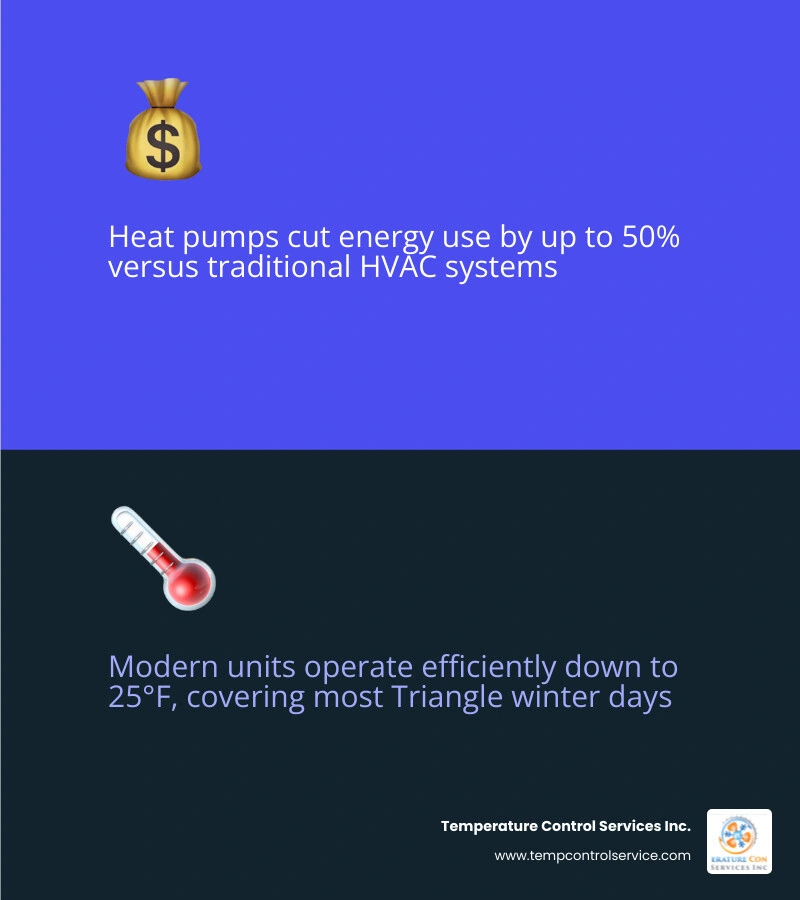
Standard air-source heat pumps are exceptionally efficient down to about 25°F to 30°F. Since temperatures in communities like Chapel Hill, Creedmoor, and Butner rarely stay below freezing for extended periods, a heat pump can easily manage your heating needs for nearly the entire winter.
Instead of blowing short blasts of scorching 120°F to 140°F air like a gas furnace, a heat pump delivers a steady stream of milder, consistent warmth (typically around 95°F to 100°F). This eliminates the hot and cold spots common in multi-story houses. Homeowners across the region consistently praise this gentle, even heating. To see why this technology is such a natural fit for our local climate, read Are Heat Pumps Ideal for the Triangle Area Climate and find out Why Heat Pumps Are Popular in the Southeast.
Upgrading to a heat pump is one of the most rewarding home improvements you can make. Beyond keeping your indoor climate perfectly controlled, it lowers your environmental footprint by eliminating on-site fossil fuel combustion. A high-efficiency heat pump can reduce your home's HVAC-related carbon emissions by up to 40%. Additionally, modern buyers actively look for energy-efficient homes, meaning a new system can boost your property value.
Let's look at the specific financial, sizing, and incentive-based advantages that make this upgrade so appealing in 2026.
The financial impact of switching to a heat pump is substantial. Because these systems transfer heat rather than generating it, they can operate at efficiencies of 300% to 400% — meaning they deliver three to four times more heat energy than the electrical energy they consume.
By replacing an old, inefficient system (especially older electric resistance baseboards or outdated 10 SEER air conditioners), homeowners can cut their heating and cooling costs by up to 50%. On average, this translates to savings of about $500 per year on utility bills.
In a real-world North Carolina case study, a homeowner upgraded an old 10 SEER system to a modern 3.5-ton 15.2 SEER2 heat pump. Their daily energy usage during peak periods plummeted from 126 kWh to just 40.5 kWh — a massive 68% drop in power consumption.
To explore the financial return on investment and learn more about high-efficiency options, read about Heat Pump Installation Energy Efficiency. You can also find out Why We Recommend Heat Pump Installation and compare various Energy Efficient AC Replacement Options.
To capture all the heat pump benefits for North Carolina homeowners, the system must be sized correctly. An oversized unit will cycle on and off rapidly, wearing out components prematurely and failing to dehumidify your home. An undersized unit will run constantly, struggling to keep up on hot July afternoons and relying too heavily on expensive backup heat in January.
Professional HVAC installers use a mathematical formula called a Manual J load calculation. This assessment takes into account:
Getting these calculations right ensures optimal airflow, maximum efficiency, and a longer equipment lifespan. For step-by-step guidance on selecting the right capacity for your home, consult our Heat Pump Sizing and Selection Guide. You can also read about Choosing the Right Heat Pump With Us to understand what to expect Before Installing a Home Heat Pump.
One of the best reasons to upgrade your system in 2026 is the availability of historic state and utility rebates. By combining different programs, you can significantly reduce your upfront installation costs.
The Energy Saver NC program, funded by the federal Inflation Reduction Act, offers two primary pathways:
In addition to state programs, local utility providers offer their own incentives. For example, Duke Energy progress and Duke Energy Carolinas customers can receive rebates ranging from $500 to $1,000 for installing high-efficiency smart-saver heat pumps.
By stacking these incentives, eligible homeowners can save thousands of dollars on a complete system upgrade. To learn how to navigate these programs, read our guides on North Carolina Energy Rebates for HVAC Upgrades, explore Duke Energy Rebates for NC Homeowners, and follow our step-by-step instructions on How to Apply for Energy Rebates in North Carolina.
Because a heat pump provides both heating and cooling, it operates year-round. This continuous use makes regular seasonal maintenance essential to protect your investment and maintain high operating efficiency.
Simple homeowner tasks include:
In addition to these basic tasks, you should schedule professional tune-ups twice a year — once in the spring before the cooling season, and once in the fall before the cold weather arrives. Professional maintenance ensures correct refrigerant levels, clean electrical contacts, and clear condensate drains.
If you ever encounter performance issues, having a trusted local specialist is key. Check out our comprehensive Heat Pump Repair Durham NC Guide, learn some helpful Heat Pump Repair Home Durham NC Tips, and read our compiled Heat Pump Repair Best Tips Durham NC to keep your system running smoothly.
| Feature | Modern Heat Pump System | Traditional AC + Gas Furnace |
|---|---|---|
| Primary Energy Source | Electricity | Electricity (Cooling) + Natural Gas/Propane (Heating) |
| Operation Method | Moves existing heat indoors or outdoors | Moves heat outdoors (Cooling); Burns fuel to create heat (Heating) |
| Summer Humidity Control | Excellent (Variable-speed runs longer, low-speed cycles) | Good (Standard cycling) |
| Winter Air Comfort | Steady, gentle, continuous warm air (95°F–100°F) | Hot, intense, intermittent bursts of air (120°F–140°F) |
| Average Lifespan | 10 to 15 years (Runs year-round) | AC: 12–15 years; Furnace: 15–20 years |
| Carbon Footprint | Extremely low (Zero on-site emissions) | Higher (Combustion emissions from fuel burning) |
Choosing between a heat pump and a traditional system comes down to understanding how they deliver comfort. While a gas furnace creates heat through combustion, a heat pump simply relocates it. This fundamental difference is why heat pumps are so much more efficient. To compare these options further, read about the Heat Pump Advantages Over Traditional HVAC and consider The Environmental Impact of Modern AC.
While heat pumps are incredibly efficient, they do have some limitations. As outdoor temperatures fall below freezing, there is less heat available in the air for the system to extract.
To keep your home warm during these rare cold snaps, most heat pumps are equipped with auxiliary electric resistance heat strips (often called "emergency heat"). While these heat strips keep you warm, they use significantly more electricity than normal heat pump operation.
If your system relies on emergency heat too often, your winter power bills can spike. Frequent activation can also indicate a dirty air filter, low refrigerant, or an undersized system. For tips on managing your system during the coldest weeks of the year, read our guide on Heat Pump Performance Issues in Winter.
If you want the ultimate combination of high efficiency and cold-weather reliability, a dual-fuel (or hybrid) system might be the perfect choice.
A dual-fuel system pairs an electric heat pump with a high-efficiency gas furnace. For the vast majority of the year — when temperatures are mild or hot — the electric heat pump handles all the heating and cooling. However, if a severe winter storm hits and temperatures drop below freezing, the system automatically switches over to the gas furnace.
This hybrid approach ensures you always heat your home using the most cost-effective fuel source available at that moment. If you are considering a system replacement, look at our Heat Pump Replacement Durham NC Guide and reach out to a trusted Heat Pump Replacement Company in Durham NC to discuss dual-fuel options.
Yes. Modern heat pumps are highly advanced. While older models struggled when temperatures dropped below freezing, today’s systems utilize variable-speed inverter technology to extract heat from outdoor air even in extreme cold. If temperatures drop below the system's optimal operating range, the auxiliary electric heat strips or a backup gas furnace will automatically turn on to keep your home comfortable.
For the vast majority of our mild winter days, yes. Because a heat pump transfers existing heat rather than burning fuel, it operates at efficiencies well over 300%. A standard gas furnace maxes out around 80% to 95% efficiency. A heat pump is almost always the more cost-effective option during our long shoulder seasons and moderate winter weeks.
With regular professional maintenance, a heat pump typically lasts between 10 and 15 years. Because these systems handle both heating and cooling duties, they run year-round, which naturally subjects them to more wear and tear than a dedicated furnace. Keeping your outdoor unit clean and scheduling biannual tune-ups are the best ways to maximize your system's lifespan.
Investing in a modern heat pump is one of the smartest decisions a North Carolina homeowner can make. From lowering your monthly utility bills to keeping your home perfectly dehumidified during our sticky summers, the heat pump benefits for North Carolina homeowners are clear. With historic rebates available through Energy Saver NC and local utilities in 2026, there has never been a better time to upgrade.
At Temperature Control Services Inc., we are proud to be the premier family-owned HVAC provider in the Triangle area. Whether you live in Durham, Cary, Chapel Hill, Wake Forest, Morrisville, Creedmoor, Butner, Franklinton, Oxford, Stem, or Youngsville, our certified technicians are here to help you select, size, and install the perfect comfort system for your home.
When upgrading your HVAC system, working with an experienced local team makes all the difference. Learn more about the Benefits of Choosing a Certified Local HVAC Company, see how we focus on Supporting Local Businesses for Home Comfort, and find out What Amana Comfort Specialist Certification Means for your home's long-term comfort.
Ready to start saving and enjoy reliable, year-round comfort? Schedule your heat pump service with Temperature Control Services Inc. today!




.svg)