


Recent Blog
Stay updated with our latest blog posts.

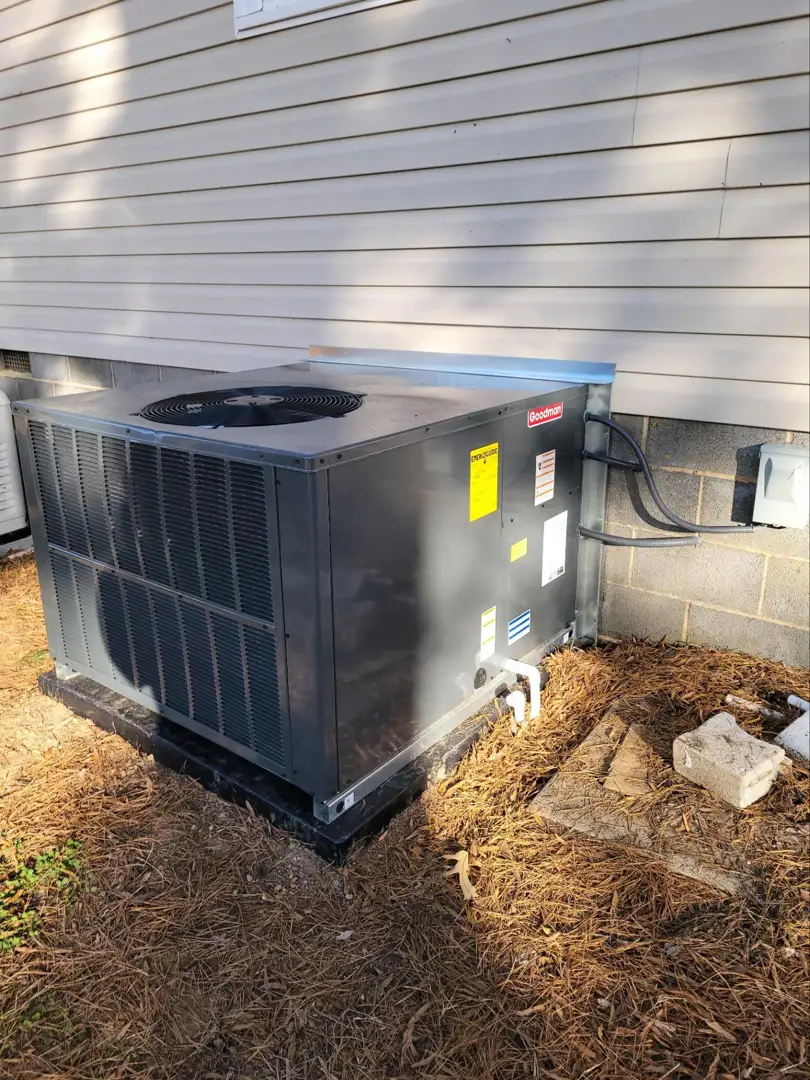
What shortens AC lifespan in humid conditions is one of the most important things Triangle-area homeowners can understand before their system fails early. In places like Durham, Cary, and Chapel Hill, NC, summer humidity doesn't just make the heat feel worse — it forces your air conditioner to work twice as hard, every single day.
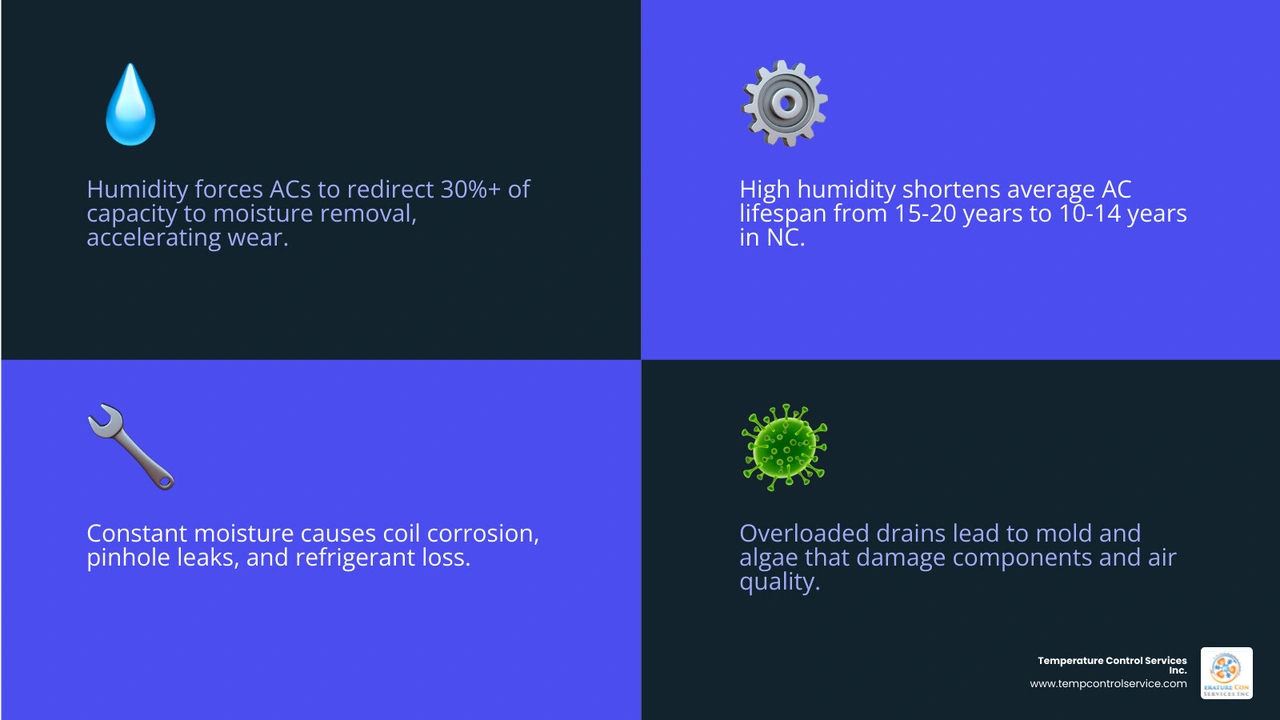
Here is a quick breakdown of the main factors that shorten AC lifespan in humid conditions:
Nationally, central air conditioners last an average of 15 to 20 years. In hot, humid climates like North Carolina's, that number drops to 10 to 14 years — and neglected systems can begin breaking down even sooner. The good news is that most of this damage is preventable with the right knowledge and care.
This guide walks you through exactly what is wearing your system down, the warning signs to watch for, and the steps you can take to protect your investment.
Must-know what shortens ac lifespan in humid conditions terms:

To truly understand how humidity acts as a silent system killer, we have to look at the sheer physical stress it places on your equipment. When an air conditioner operates in a dry climate, its primary job is simple: lower the air temperature. However, in the humid climate of the American Southeast, your air conditioner is forced to perform a grueling dual workload. It must simultaneously cool the air and wring out gallons of suspended water vapor.
Because of this constant double-duty performance, the operational lifespan of a central air conditioning unit in North Carolina is significantly shorter than the national average. While a system in a dry Western state might easily breeze past its 18th birthday, a system in our region faces a much steeper uphill battle. You can read more about these regional differences in our detailed breakdown of how long does an ac system last in the southeast.
Without proactive maintenance, the components inside your outdoor condenser and indoor air handler accumulate wear at an accelerated rate. To help visualize this impact, consider the differences in how a system wears down based on its environmental conditions:
| Operational Metric | Dry Climates (e.g., Desert Southwest) | Humid Climates (e.g., Central North Carolina) |
|---|---|---|
| Average AC Lifespan | 15 to 20 Years | 10 to 14 Years (8 to 10 if neglected) |
| Cooling Focus | Sensible Cooling (Temperature reduction only) | Sensible + Latent Cooling (Temperature & moisture removal) |
| Capacity Allocation | ~90% to Temperature Reduction | ~70% to Temperature / ~30%+ to Dehumidification |
| Corrosion Risk | Very Low | Extremely High (Galvanic & Formicary corrosion) |
| Average Filter Lifespan | 60 to 90 Days | 30 to 45 Days (Due to sticky, moisture-laden dust) |
| Drain Line Clog Risk | Negligible | High (Algae, mold, and biological slime buildup) |
In North Carolina, our systems don't just battle high summer humidity; they also cope with dramatic seasonal transitions and thermal cycling. Throughout the year, our regional climate swings from freezing winter temperatures to sweltering, swampy summer afternoons.
These extreme temperature swings cause the metal components inside your HVAC system to expand and contract violently. When you combine this physical expansion and contraction with relative humidity levels that frequently exceed 70% to 80% during June, July, and August, you create the perfect environment for rapid mechanical fatigue.
The humidity also prevents your home from cooling down naturally at night, meaning your system rarely gets a rest. For a deeper look at how our local weather patterns shape your system's daily operations, explore our guide on how north carolina climate affects your hvac system.
To understand what shortens ac lifespan in humid conditions, we have to look at thermodynamics. Air conditioning relies on two types of heat cooling: sensible cooling (which lowers the actual temperature you read on a thermometer) and latent cooling (which removes the hidden heat trapped in water vapor).
Water holds an incredible amount of thermal energy. Before your air conditioner can drop the temperature in your living room by even one degree, it must first condense the airborne water vapor into liquid water on the cold evaporator coils. This phase change requires a massive amount of energy. You can learn more about this thermodynamic struggle in our article on how humidity affects your ac performance.
When relative humidity is high, the latent heat load in your home skyrockets. This means that roughly 30% or more of your air conditioner's total BTU capacity is completely redirected away from cooling your home and is instead spent strictly on condensing water vapor.
Because the system is spending so much of its energy fighting moisture, it has to run for much longer cycles to reach your thermostat's target temperature. Instead of running a standard, efficient 15-minute cycle, your compressor might run continuously for 45 minutes or longer.
This extended runtime translates directly to:
While long runtimes wear out the compressor, the opposite problem—short cycling—can be just as destructive in humid weather. Short cycling occurs when your air conditioner turns on and off rapidly, never running long enough to complete a full cooling cycle.
In humid conditions, short cycling is often caused by an oversized AC system or a malfunctioning thermostat. Because the system is too large, it quickly drops the air temperature and shuts off before it has a chance to pull moisture out of the air. This leaves your home feeling cold but incredibly clammy and sticky.
As the humidity level rises indoors, the air feels warmer than it actually is, prompting the thermostat to turn the system back on just minutes later. This constant starting and stopping places immense electrical strain on your system's startup capacitors and contactors, causing premature electrical failure and adding massive wear to the compressor.
High humidity does more than just overwork your system mechanically; it also introduces destructive chemical and biological elements that attack your system from the inside out. When warm, humid indoor air passes over your cold evaporator coils, it creates a constant stream of liquid water that must be managed. If this moisture is not drained away quickly and cleanly, it becomes a catalyst for corrosion and biological growth.
Your air conditioner's condensate drain system is responsible for safely funneling away gallons of water every day. However, this dark, damp environment is the perfect breeding ground for mold, algae, and bacterial biofilms (often referred to as "white slime").
Over time, this biological growth accumulates inside the narrow condensate drain lines, forming a thick clog. When the drain line clogs, the water has nowhere to go. It backs up into the drain pan, which can overflow and cause severe water damage to your ceilings, walls, and the surrounding HVAC equipment.
Even worse, if your system does not have a functioning safety overflow switch, this standing water will continuously expose your indoor air handler to high local humidity, accelerating rust and allowing mold spores to blow directly into your home's ductwork, compromising your indoor air quality.
The constant presence of moisture on your evaporator coils triggers two highly destructive forms of metal degradation:
These tunnels eventually break through the surface, creating tiny pinhole refrigerant leaks that are incredibly difficult to locate and repair. As refrigerant slowly leaks out, the system's pressure drops, forcing the compressor to work even harder and run hotter, which dramatically shortens its remaining lifespan.
Your air conditioner will usually tell you when it is buckling under the stress of North Carolina's humidity. Recognizing these early warning signs can help you schedule a repair before a minor issue turns into a complete system failure:
Fortunately, you do not have to let local humidity destroy your air conditioner. By taking a few proactive steps, you can significantly reduce the workload on your system and extend its operational life:
To keep your system running smoothly year-round, check out our comprehensive HVAC maintenance checklist for humid climates and prepare your system early with our guide on pre-season ac maintenance tasks.
While there are several tasks you can handle on your own, nothing replaces the value of a professional HVAC inspection. In a humid climate, annual or bi-annual professional maintenance is an absolute necessity to prevent early system failure.
During a professional tune-up, our experienced technicians will:
Investing in regular care pays off. Learn more about how routine checkups protect your wallet by reading about the benefits of regular hvac maintenance in the southeast and our expert tips on how to maintain your heating and cooling system.
Even with meticulous maintenance, every air conditioner eventually reaches the end of its useful life. When your system starts acting up during a humid summer, you will face a tough decision: do you keep patching it up with repairs, or is it time to invest in a complete replacement?
Making this decision requires balancing the system's age, its current efficiency loss, and the frequency of its breakdowns. If you want to dive deeper into this topic, check out our articles on when should you replace your ac and the top signs your hvac needs replacing not just fixing.
To take the guesswork out of this financial dilemma, we recommend applying a simple industry standard known as The $5,000 Rule.
To use this rule, multiply the cost of your pending repair by the age of your air conditioning unit:
$$\text{Cost of Repair} \times \text{Age of System (in Years)} = \text{Decision Index}$$
For example, if your 10-year-old system needs a $600 repair, your index is $6,000 ($600 x 10). In this scenario, replacing the unit is the wiser long-term financial decision. Conversely, if an 8-year-old system only needs a $300 capacitor replacement, your index is $2,400, making a repair the clear winner. You can read a complete breakdown of this calculation in our guide to the 5000 dollar rule for ac replacement.
High humidity forces your air conditioner to run much longer cycles to remove moisture from the air. This continuous operation causes the compressor to run at elevated internal temperatures. Over time, this extreme heat breaks down the compressor's lubricating oil, turning it acidic. Without proper lubrication, mechanical friction increases rapidly, leading to bearing wear, electrical winding failure, and eventual motor burnout.
Yes, absolutely! A whole-home dehumidifier works alongside your HVAC system to pull moisture from the air independently. Because the dehumidifier handles the heavy lifting of latent heat removal, your air conditioner only has to focus on cooling the air temperature. This drastically reduces your AC's run times, minimizes starting cycles, and lowers the wear and tear on your compressor, fan motors, and contactors.
While standard filter packaging often recommends replacing them every 90 days, the reality of a humid North Carolina summer is much different. High humidity makes airborne dust and pollen sticky, causing them to adhere to and clog the filter fibers much faster. We recommend checking your filter every 30 days between June and September and replacing it within 30 to 45 days to maintain proper system airflow and prevent coil freezing.
Dealing with what shortens ac lifespan in humid conditions doesn't have to be a source of summer stress. At Temperature Control Services Inc., we are proud to be the #1 family-owned HVAC provider in the Triangle area. Our team of friendly, professional technicians is dedicated to keeping your home comfortable and your cooling system running efficiently, no matter how sticky the weather gets outside.
Whether you need a proactive seasonal tune-up, a reliable AC repair, or a complete system replacement with flexible financing options, we are here to help. We proudly serve homeowners and businesses across the Triangle, including:
Don't let the humidity cut your air conditioner's life short. Contact us today to schedule your system inspection, or visit our air conditioning services page to learn more about how we can keep your home cool, dry, and comfortable all summer long!




.svg)